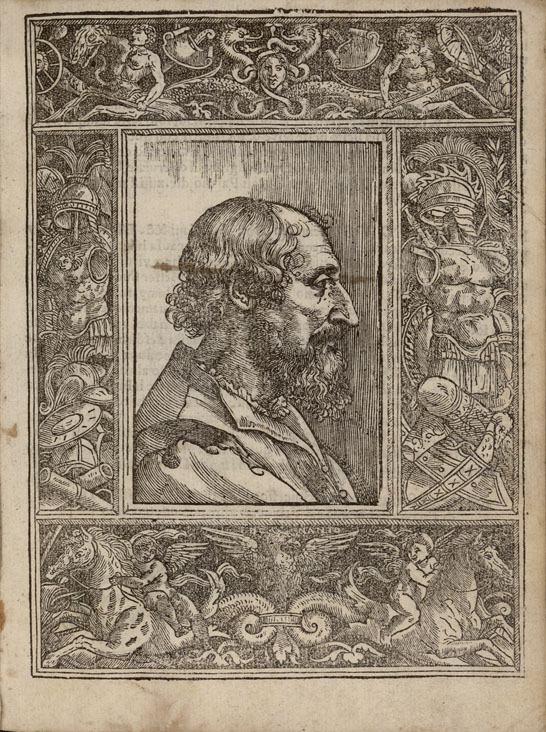
Unveiling Ariosto: The Author's Wry Take on Love and Legacy
Who is the creative genius behind one of the most sprawling, witty, and profoundly influential epic poems of the Renaissance? For those seeking the definitive answer to "Who is the author of Orlando Furioso?" – perhaps for a challenging literary crossword puzzle or a quest for deeper understanding – look no further than
Ludovico Ariosto. His masterpiece,
Orlando Furioso, first published in its complete form in 1532, transcends simple categorization, offering readers a dazzling array of adventures, profound philosophical musings, and a distinctly wry commentary on the human condition, particularly the follies of love and the enduring power of legacy.
Ariosto, an Italian poet who served the powerful Este family of Ferrara, masterfully blended the traditions of chivalric romance with sharp satire, philosophical depth, and groundbreaking metafictional techniques. Far from being a mere comic poem,
Orlando Furioso is a complex tapestry where the absurd and the profound coexist, forcing us to question the very nature of truth, heroism, and memory.
A Chivalric Tapestry Woven with Wit and Wonder
At its heart,
Orlando Furioso is a chivalric romance, teeming with the expected elements: valiant duels, glorious jousts, perilous quests, and amorous adventures. Damsels are in distress, Christians battle Saracens, and a host of monsters and magical interventions propel the intricate plot forward. Yet, Ariosto infuses these traditional tropes with an unmistakable layer of irony and sophisticated commentary that elevates the work far beyond typical adventure fare.
Within its sprawling narrative, we find echoes of Virgilian epics, alongside bawdy tales that would make a modern reader blush. Ariosto frequently breaks the fourth wall, engaging in direct dialogue with his audience and offering "metafictional gestures" that remind us we are reading a crafted story. He initiates running debates about female virtue and societal expectations, and his outrage at the foreign invasions plaguing Italy of his time provides a poignant backdrop to the fantastical battles. All of this is interwoven with subtle praise for his patrons, the Este family, whose dynastic marriage provides a hopeful, if calculated, resolution amidst the chaos. The poem is not merely a story; it's a reflection, a critique, and a celebration of an entire worldview, often viewed through Ariosto's uniquely wry lens on human motivations and aspirations. To truly appreciate the poem's breadth, one must embrace its multifaceted nature, where every heroic deed or magical flight carries a whisper of philosophical inquiry or a smirk of gentle mockery.
Orlando's Madness and the Lunar Repository of Lost Wits
Perhaps no single episode better encapsulates Ariosto's ingenious blend of fantasy, comedy, and profound insight than the journey to the Moon. The central hero, Orlando – Charlemagne's formidable right-hand man, celebrated for countless adventures – has, quite literally, run mad for love. His beloved Angelica has chosen a lowly Saracen soldier over him, shattering his sanity and scattering his wits across the cosmos.
To recover these precious lost faculties, Orlando’s loyal comrade-in-arms, Astolfo, embarks on an extraordinary celestial voyage. Guided by none other than St. John the Evangelist himself, Astolfo travels to the Moon, a remarkable repository where all that is lost on Earth can be found. Here, Ariosto’s satirical genius truly shines. The favors of fickle princes appear as inflated bellows, ladies' charms are revealed as treacherous, limed snares, and, most importantly, lost wits – including Orlando’s – are stored in individually labeled bottles. This vivid imagery is not just whimsical; it's a scathing commentary on the fleeting nature of earthly desires and ambitions. It's a journey not just through space, but through the absurdities of human striving, where the truly valuable things are often the most easily misplaced. For a deeper dive into this incredible lunar landscape, consider exploring
The Moon of Orlando Furioso: Ariosto on Fame, Poets, and Folly.
Poets, Princes, and the Architects of Immortality
Within the moonlit palace, beside the mythical River Lethe, Astolfo witnesses a profound allegory of fame and oblivion. The Fates diligently spin a thread for every human life. Once spun and cut, each thread is tied to a nameplate, which Father Time – a tireless old man – gathers and drops into the river, destined for oblivion. Yet, not all is lost to the waters of forgetfulness. A flock of carrion crows and vultures might snatch some nameplates, only to let them fall back into the depths, symbolizing the short-lived, false praise of flatterers who surround princes but cannot preserve their true memory.
In stark contrast, two magnificent white swans convey their chosen plates safely downstream, bearing them to the temple of fame. These swans, St. John explains to a bewildered Astolfo, are the poets. They alone possess the power to bestow undying fame, to rescue names from the clutches of oblivion. This powerful revelation serves as a clear, albeit sly, admonition to princes and patrons:
- Reward Your Poets: For it is they who determine if and how you will be remembered.
- Seek Genuine Praise: Flatterers offer only fleeting recognition. True legacy is forged by the lasting words of genuine artists.
- Invest in Art: The cultural contributions of poets are not mere entertainment; they are the bedrock of historical memory.
This segment is Ariosto's direct, self-referential plea for the recognition and support of artists, implicitly advocating for his own craft and the value of his patrons' investment in him. It underscores the theme of legacy, suggesting that true immortality is not achieved through power or wealth, but through the narrative crafted by those who wield the pen.
Ariosto's Metafictional Mirror: Challenging Truth and Tradition
St. John's lecture to Astolfo takes an even more provocative turn, challenging the very fabric of accepted historical narratives. "You may think," St. John declares, "that the Greeks won at Troy and that Penelope was faithful to her husband because it pleased Homer to say so, but the facts are otherwise." He continues with a startling assertion:
E se tu vuoi che ’l ver non ti sia ascoso, tutta al contrario l’istoria converti: che i Greci rotti, e che Troia vittrice, e che Penelopea fu meretrice.
(If you wish the truth not to be hidden from you, turn the story around: the Greeks were beaten, the Trojans victorious and Penelope was a whore.)
This radical reinterpretation is not a factual claim, but a powerful demonstration of the poet's immense influence. St. John highlights that even murderous tyrants like Augustus and Nero receive vastly different reputations based on the writers they patronized. Augustus, who shrewdly supported Virgil, enjoys a far better historical standing than Nero, who failed to cultivate such poetic champions. The irony is palpable: St. John, a biblical figure, openly laments the neglect of poets by contemporary patrons, revealing his own bias as a "writer" who "praised my patron well, and unlike the skinflint princes of today, he rewarded me well for it."
This profound metafictional layer is where Ariosto truly distinguishes himself. He's not just telling a story; he's commenting on the *act* of storytelling, the construction of history, and the symbiotic relationship between power and narrative. His "wry take" here isn't just humorous; it's deeply critical of how easily truth can be manipulated and how essential it is to consider the source and the motives behind any given account. It's a timeless insight into the power of propaganda and the enduring role of the artist as both chronicler and creator of legend. This clever blend of romance, madness, and timeless wisdom is what makes
Ariosto's Orlando Furioso: Romance, Madness, and Timeless Wisdom a continuously relevant masterpiece.
Conclusion: The Enduring Legacy of Ariosto's Wry Genius
Ludovico Ariosto, the celebrated author of
Orlando Furioso, crafted a work that remains an unparalleled monument to Renaissance literature. His "wry take" on love, legacy, and human folly permeates every canto, from the tragicomic madness of Orlando to the cynical celestial revelations on the Moon. He invites us to laugh, to ponder, and to question, reminding us that reality is often more complex, and more subject to interpretation, than we might assume. Ariosto’s genius lies not just in his boundless imagination, but in his sophisticated understanding of the human heart and the enduring power of narrative. For anyone seeking to delve into the mind of a true literary master, or perhaps solve that challenging "Author Of Orlando Furioso Crossword" clue, Ariosto's epic offers a journey into a world where magic, satire, and profound wisdom intertwine, leaving an indelible mark on Western literature.